How to Beat AI Deepfakes With a Powerfully Human Job Search

The hiring process has always had its share of embellishments. A slightly inflated title here, a vague departure reason there. But what I'm seeing now as a recruiter is something far more disorienting: candidates who aren't entirely who, or even what, they appear to be.
AI fraud in hiring has ramped up dramatically. According to NovoResume, 86% of recruiters say they've caught a candidate in a lie, and the nature of those lies is changing fast. Here's what I'm actually seeing from the other side of the interview table, and what you can do to show up as a real human.
Quick takeaways for job seekers
- Present yourself honestly, accent and all.
- Don't use AI for your resume or your follow-ups.
- Make sure your resume, LinkedIn and interview answers all tell the same story.
- Find the thing that sets you apart and make it visible.
- Come ready with specific, real examples. That's where AI falls apart.
What Recruiters Are Actually Seeing
You might picture AI fraud as a pixelated face glitching on a video call. Visual deepfakes exist, but the cases I've personally caught have been in the audio. Twice now, I've had a candidate use AI to alter their accent mid-interview. In one case, the candidate went from a British accent to an Indian accent partway through the conversation. It would glitch back and forth, then it just became a straight Indian accent. He was speaking English the whole time, so the idea that he needed to alter his English was unnecessary.
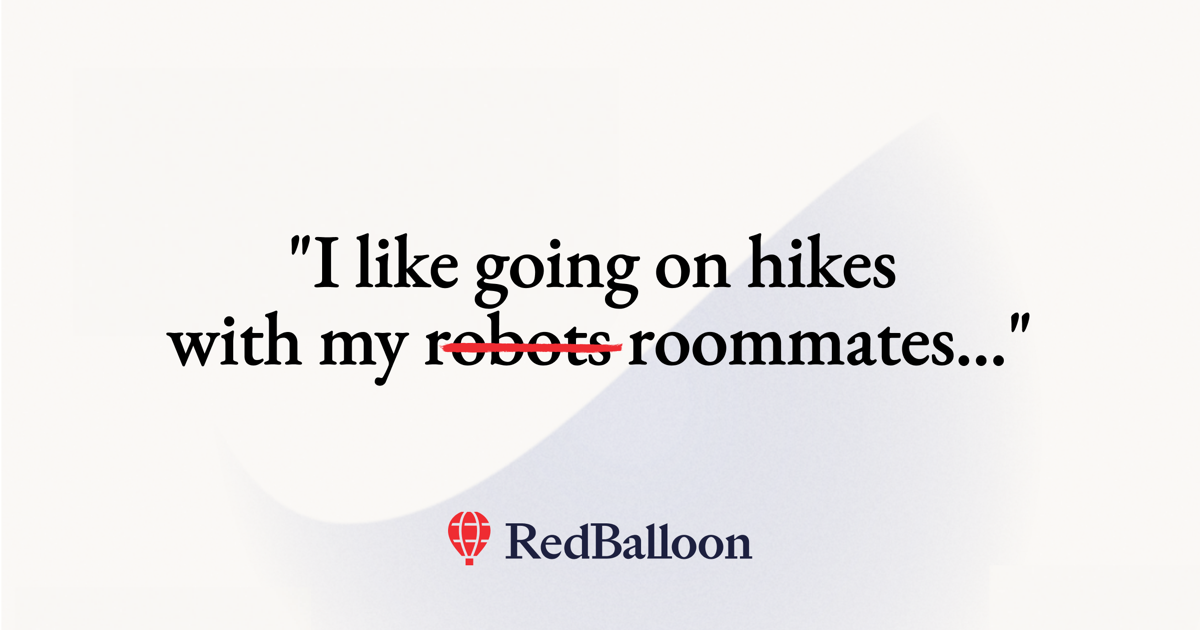
Then there was the candidate who told me he liked going on hikes with his “robots.” He meant roommates. His AI voice modifier, apparently trying to translate his speech into something more professional, made a bizarre substitution. It's an oddly funny moment, but it's also a perfect illustration of how these tools can betray the very people using them.
I've also seen people reading AI responses during an interview: eyes off screen, things like that. One time I saw the reflection of a screen in someone's glasses. When someone quietly tries to use AI to answer questions, it's very obvious.
I hesitate to put an exact number on it (I really should start keeping track), but I can say that since I started recruiting, there's been a dramatic ramp-up in how many people try this.
What this means for you: Don't be insecure about your accent. Just present yourself honestly. If an interviewer doesn't have goodwill toward that, or they're filtering based on accent, you wouldn't want to work there anyway. Turn your camera on, keep your setup simple and let the interviewer meet the real you.
How My Screening Process Has Changed
When I sense a candidate is leaning on AI during an interview, my first instinct is not to end the call. I redirect. I ask very specific questions to get them to engage and step away from the AI. I want to give candidates the benefit of the doubt, because I think it's a real temptation right now across the board. And it works. I've had people essentially ditch the AI and start engaging like a real person.
Why the benefit of the doubt? Because once someone gets to the interview, I really do think they're qualified. The majority of the time, it's not someone who scammed their way through the process. It's someone qualified who is perhaps misguided about their approach, or just super intimidated.
What this means for you: The specific questions are where AI falls apart, and where you can showcase your real self. Before an interview, think through real examples of problems you've solved, what you did and what happened. Specific, lived detail is the one thing a script can't fake.
Your Resume: Read the Room
My advice on resumes is simple: don't use AI to write it. Here's what that looks like in practice.
Watch the em dash. Even though we all love an em dash, right now you should avoid it. If I see more than one, I just think AI. I don't recommend dying on that hill, even if you're a writer who insists on proper usage. Read the room and use a semicolon or colon instead.
Make sure it matches the rest of you. Your resume, your LinkedIn and what you say in the interview should all tell the same story. If you claim twelve years of experience but your profile shows five, that's a problem (more on that below).
Find your differentiator. I got a resume this week with a line at the top: “No AI was used to create this document.” The candidate works in data science and tech, a world where AI is used all the time. I actually appreciated the signal. He was reading the room. He was saying: people are doing this constantly, and I want to show I'm not.
I'm not saying everyone should add that line. The takeaway is the mindset behind it: find the thing that sets you apart and really emphasize it, concisely and not in an overly creative way. In some jobs it might not help, but finding that differentiator matters.
Show your work if you can. A personal website or portfolio helps. It shows us what's really important to you, and it reveals taste and quality of work. For roles like graphic design, it lets you show your style and aesthetic, and whether it matches what the client is looking for.
References Matter More Than Ever
In a world where text can be generated instantly, a real conversation with someone who has actually worked with you carries weight. The value of references has gone up since AI came on the scene.
A strong reference has a story. They have a very specific example, and they're excited to tell you about this person. We always ask, “Would you hire or work with this person again?” When the answer is “Absolutely, I'm so sorry they left,” that's great.
Most people don't want to give negative references, even if the person was difficult to work with. They want to be respectful and kind. So when we do get a negative one, it's always paired with others and never used as the end-all-be-all. We do keep it in mind, because it goes against human nature to give a negative reference.
Something I learned from another recruiter: most recruiting agencies now use an AI tool to conduct reference checks. That recruiter looked at five years of data, and in that entire time, the AI reference check never reversed a hiring decision. Not once. To me, that's one more reason the human conversation is worth having.
What this means for you: Choose references who can tell a specific story about working with you, and give them a heads-up so they're ready to share it.
The Case for a Working Interview
I'm a huge proponent of working interviews, where a candidate tries out the job for a bit and, if possible, interacts with the team. I know it makes the hiring process longer and isn't always feasible, but it tells both parties a lot. It also happens to be a surefire way to screen out AI fraud.
We just onboarded an organization where the hiring manager said so many of his interviews had been AI fakes, including candidates who had gotten past HR and been recommended to the IT department head. He was even considering requiring in-person meetings for what is a fully remote role.
It's crazy, but it's also fascinating. We've had about twenty years of total digital immersion, and now people across all backgrounds are saying we need in-person communication and real connection again. It turns out being deceitful is not a good strategy.
What this means for you: If you're offered a working interview or an in-person meeting, take it. It's your best chance to prove you're exactly who you say you are.
My One Piece of Advice
If you're trying to stand out as genuinely human and genuinely interested, just don't use AI for this. Don't use it for your resume, and don't use it for your follow-ups.
I had a candidate who followed up to an interview that never happened saying “it was great talking to you yesterday.” And yes, the AI sent a follow-up referencing an interview that had been rescheduled and then canceled. That, combined with how impersonal it was, was enough. With plenty of other qualified candidates, he was passed over.
In a hiring market flooded with machine-generated applications, the most powerful thing you can bring is still the thing AI can't replicate: you.
Sara Nibler is a senior recruiter at RedBalloon, a job search platform built on the belief that meaningful work and authentic hiring go hand in hand. Learn more at redballoon.work.
Show up as the real thing.
Find a role where being genuinely, powerfully human is your advantage.
Browse Jobs